Quick Links

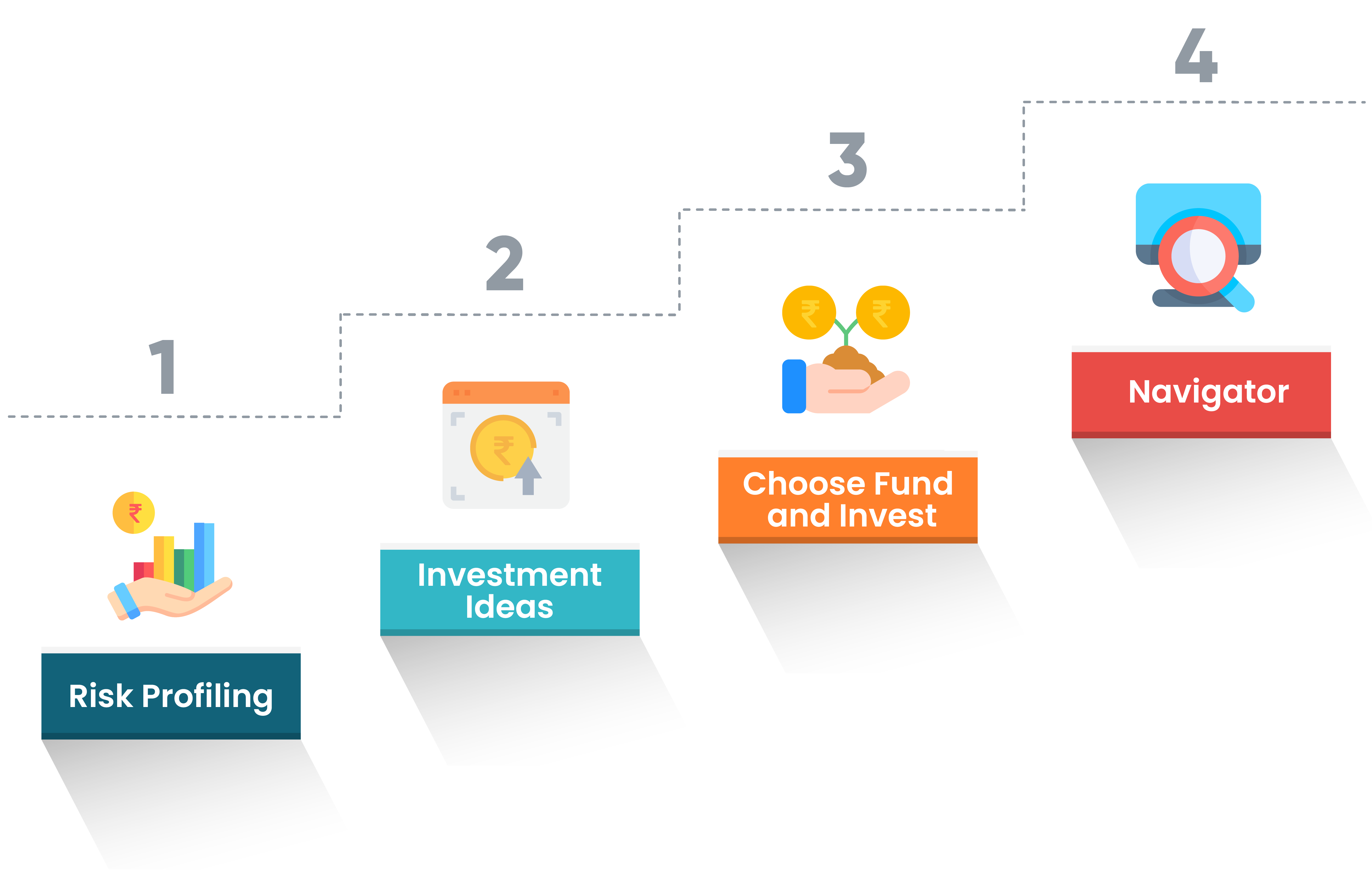

Mutual funds are a well-liked investment option that enables you to engage in the financial markets without requiring in-depth understanding. They are professionally managed investment vehicles that offer chances to build wealth.
Investing in mutual funds is like having a team of experts managing your money. These funds gather investments from various individuals and channel them into a diversified portfolio of stocks, bonds, or other assets.
Why Do You Need It?
Mutual funds provide access to a diversified portfolio managed by professionals. They suit investors with varying risk appetites and financial goals.
Benefits:
Types of Mutual Funds
Mutual funds offer a simple way to grow your savings, and you can start today to secure a financially sound future.
...
A Specialized Investment Fund (SIF) is a SEBI-regulated investment product that sits between a regular mutual fund and a Portfolio Management Service (PMS). It is offered by mutual fund houses, but it is allowed to use more flexible strategies, such as limited short selling through derivatives, which ordinary mutual fund schemes cannot. SIFs are meant for investors who are comfortable with higher risk and can commit at least ₹10 lakh. They are not a replacement for your core mutual fund portfolio. They are an optional, specialised addition for investors who understand how the strategies work.
Until 2025, an investor in India essentially had three choices: mutual funds (any amount, but with limited portfolio flexibility), PMS (minimum ₹50 lakh) and Alternative Investment Funds or AIFs (minimum ₹1 crore). SEBI noticed a gap between mutual funds and PMS in terms of portfolio flexibility and introduced SIFs to bridge it. The framework was notified through an amendment to the SEBI (Mutual Funds) Regulations on 16 December 2024, and the detailed rules took effect on 1 April 2025.
| Feature | What it means |
|---|---|
| Regulator | SEBI, under the mutual fund regulations. Offered only by AMCs that SEBI has approved to run a SIF. |
| Minimum investment | ₹10 lakh per investor (PAN level), counted across all SIF strategies of that AMC. Accredited investors are exempt from this minimum. |
| Structure | Pooled fund. You hold units, as in a mutual fund, not individual shares as in PMS. |
| Strategy flexibility | Long-short strategies: up to 25% of net assets can be held as unhedged short exposure through exchange-traded derivatives. |
| Liquidity | Set by each strategy: daily to weekly or twice a week. A redemption notice period of up to 15 working days may apply. Interval and close-ended strategies must be listed on a stock exchange. |
| Risk label | Each strategy carries a 5-level risk band, reviewed every month. |
| Identity | Separate brand name and logo from the AMC's regular mutual fund schemes, with its own website. |
| Fund-level tax | None. You are taxed only when you redeem or receive income, on lines similar to mutual funds. |
SEBI has defined a fixed list of strategies. Each AMC can launch only one strategy in each category, which keeps the product range simple and comparable.
| Strategy | Core rule | Minimum redemption frequency |
|---|---|---|
| Equity Equity Long-Short | At least 80% in equity and equity-related instruments; up to 25% unhedged short exposure. | Daily or less often |
| Equity Ex-Top 100 Long-Short | At least 65% in stocks outside the top 100 by market capitalisation; up to 25% unhedged short exposure on stocks other than large caps. | Daily or less often |
| Sector Rotation Long-Short | At least 80% in a maximum of 4 sectors; up to 25% unhedged short exposure, applied sector-wise. | Daily or less often |
| Debt Debt Long-Short | Debt instruments across durations, with unhedged short exposure via exchange-traded debt derivatives. | Weekly or less often |
| Sectoral Debt Long-Short | Debt of at least 2 sectors, maximum 75% in any one sector; up to 25% unhedged short exposure. | Weekly or less often |
| Hybrid Active Asset Allocator Long-Short | Moves dynamically across equity, debt, derivatives, REITs/InvITs and commodity derivatives; up to 25% unhedged short exposure. | Twice a week or less often |
| Hybrid Long-Short | At least 25% in equity and at least 25% in debt; up to 25% unhedged short exposure. | Twice a week or less often |
A long-short strategy buys securities the manager expects to do well and may also take short positions in those expected to fall. Short positions can reduce market risk in falling markets, but a wrong call can also add to losses.
| Feature | Mutual fund | SIF | PMS | AIF |
|---|---|---|---|---|
| Minimum investment | As low as ₹100 (SIP) | ₹10 lakh (accredited investors exempt) | ₹50 lakh | ₹1 crore |
| Structure | Pooled units | Pooled units | Your own securities in your own account | Pooled units |
| Short selling | Not permitted | Up to 25% of net assets (unhedged) | Per the strategy | Per the category |
| Fund-level tax | None | None | Not applicable (you are taxed on each transaction) | Depends on category |
| Liquidity | Generally daily | Daily to twice weekly or weekly; notice period up to 15 working days possible | Depends on holdings | Typically lower, with lock-ins |
| Regulation | SEBI Mutual Fund Regulations | SEBI Mutual Fund Regulations (SIF chapter) | SEBI PMS Regulations | SEBI AIF Regulations |
Based on SEBI's framework and published comparisons by AMCs and fintech platforms. Terms of an individual PMS or AIF vary by provider.
How SIFs are taxed
The fund itself does not pay tax on its trading gains. You are taxed when you redeem, based on how the strategy is invested. The table below reflects rates for FY 2025-26 as published by an AMC tax reckoner; rates are reviewed every Budget, so please confirm the current position before investing.| Type of strategy | Short-term gain | Long-term gain |
|---|---|---|
| Equity-oriented (65% or more in listed domestic equity) | 20% if held up to 12 months | 12.5% if held more than 12 months; gains up to ₹1.25 lakh a year are exempt. STT of 0.001% applies on redemption. |
| Debt-oriented (more than 65% in debt and money market) | Taxed at your income-tax slab rate, irrespective of holding period | Not applicable (treated as short-term at slab rate) |
| Others, such as hybrid (65% or less in debt, and under 65% equity) | Slab rate | 12.5% (no indexation) after 24 months for unlisted units, or after 12 months for listed units |
Always check the equity and debt allocation stated in the strategy's Investment Strategy Information Document (ISID), because the tax class follows the actual allocation, not the product name. This is general information, not tax advice.
| May be suitable if you | Probably not suitable if you |
|---|---|
| Already hold a diversified mutual fund portfolio and have surplus capital of ₹10 lakh or more for a satellite allocation | Would be uncomfortable with a strategy that can take short positions |
| Understand long-short strategies and can accept volatility and some loss of capital | Do not yet have a core portfolio of diversified mutual funds |
| Have a long investment horizon (typically 3 years or more) and do not need quick access to this money | |
| Want strategies that mutual funds cannot offer, with mutual-fund-style regulation and tax treatment |
The category is young but growing quickly. According to AMFI's monthly data, SIF assets stood at ₹31,175 crore in August 2026, up 34.5% from the previous month, with a growing list of mutual fund houses launching strategies. Growth in assets reflects investor interest, but it is not a measure of performance or safety.
Choosing a SIF is not just about picking a strategy. It involves checking whether it fits your overall portfolio, how much liquidity you need, and how the strategy will be taxed in your case. Finstreet India Investment Services LLP can help you with:
1. What is a SIF?
A Specialized Investment Fund is a SEBI-regulated investment product offered by approved mutual fund houses. It allows strategies such as long-short equity, sector rotation and dynamic asset allocation that regular mutual fund schemes cannot use.
2. What is the minimum investment in a SIF?
₹10 lakh per investor, counted at PAN level across all SIF strategies of the same AMC. Investments in the AMC's regular mutual fund schemes do not count. Accredited investors are exempt from this minimum.
3. Can I invest through SIP, SWP or STP?
AMCs may offer SIP, SWP and STP in SIF strategies, provided your total holding stays at or above the ₹10 lakh minimum.
4. What happens if my SIF value falls below ₹10 lakh because of a market fall?
This is treated as a passive breach and is not a violation. However, you will then be able to redeem only the entire remaining amount, not a part of it.
5. Is a SIF the same as PMS or an AIF?
No. A SIF is a pooled fund regulated under the mutual fund regulations, with a ₹10 lakh minimum. PMS (₹50 lakh minimum) manages securities in your own account, and AIFs ₹1 crore minimum) are privately pooled funds under separate regulations.
6. Is short selling in a SIF risky?
Yes. Each strategy can hold unhedged short exposure of up to 25% of its net assets through derivatives. Short positions can help in falling markets, but they can also add to losses if the market moves the other way.
7. How quickly can I withdraw my money?
It depends on the strategy: equity strategies offer daily redemption or less frequent, debt strategies weekly or less frequent, and hybrid strategies twice a week or less frequent. An AMC may apply a notice period of up to 15 working days. Check each strategy's offer document.
8. How are SIF gains taxed?
The fund pays no tax. For equity-oriented strategies, gains are taxed at 20% (up to 12 months) or 12.5% (over 12 months, with a ₹1.25 lakh annual exemption). Debt-oriented strategies are taxed at your slab rate. Other strategies follow separate rules. Please see the tax table above and consult your tax adviser.
9. What is the risk band?
It is the SIF equivalent of the mutual fund riskometer, with five levels from lowest to highest risk. It is assigned at launch and reviewed monthly.
10. How many SIFs are there?
SEBI allows seven strategy types (three equity, two debt, two hybrid) and one strategy per type for each SIF. Several AMCs have launched strategies since late 2025, and more are being added. [Finstreet to list the AMCs/strategies it distributes.]
11. Does a SIF guarantee returns?
No. SIFs carry market, liquidity and credit risk, and returns are not guaranteed. Please read all investment-strategy-related documents carefully before investing. Investments in Specialized Investment Fund involves relatively higher risk including potential loss of capital, liquidity risk and market volatility. Please read all investment strategy related documents carefully before making the investment decision.
Disclaimer. Past performance is not indicative of future returns. The information on this page is for general awareness only and is not investment, tax or legal advice. Please consider your specific investment requirements before choosing a strategy. Tax treatment depends on individual circumstances and is subject to change. Finstreet India Investment Services LLP makes no warranties or representations, express or implied, on products offered through its platform. [AMFI Registered Mutual Fund Distributor | AMFI Registered SIF Distributor | ARN-311357]
...
Our Portfolio Management Services are designed to grow and protect your wealth. We offer a range of investment strategies tailored to your financial goals. Portfolio Management Services involve professionals making investment decisions on your behalf, aiming to deliver optimal returns.
Types of Portfolio Management Services:
Features of Portfolio Management Services:
With our Portfolio Management Services, your wealth is in capable hands. Let us help you achieve your financial dreams.
...
The alternative investment fund is a unique investment vehicle that is beyond traditional investments like fixed deposits, equity, mutual funds, stocks, etc. Rightly named, alternate investment funds act as an alternative investment option to conventional ones. These investments are well suited for mature investors, who are willing to take higher risks to earn higher returns.
As per the recent data by SEBI, it has shown an overall growth of 30% in FY 2022-23. As of March 2022, the total commitment raised was Rs 6.41 lakh crore; in March 2023, it increased to Rs 8.34 lakh crore. In this article, we will understand alternative investment funds, their types, and their benefits. Along with this, we will explore the details of taxation and the reasons you should invest in AIFs.
What is an Alternative Investment Fund?
Alternative Investment Fund or AIF is not a conventional investment vehicle rather a privately pooled investment fund that invests in alternative asset classes such as private equity, venture capital, hedge funds, real estate, commodities, and derivatives. This fund is more popular among the HNIs (High net worth individuals) and mature institutions as the investment amount is substantially higher.
Despite being a privately pooled investment vehicle, AIFs are regulated and governed by the SEBI (Securities and Exchange Board of India). As per the SEBI (Alternative Investment Funds) Regulations, 2012, an AIF can be set up as a trust, a company, a limited liability partnership, or a corporate body. However, many of the AIFs that have been registered with SEBI are in the form of trusts.
Types of AIFs in India
Based on the investment groups and strategies, AIFs are divided into different types. AIFs can be further divided into three categories, which are mentioned below:-
Category I AIF:
This category of AIF invests in ventures such as start-ups, early-stage ventures, social ventures, SMEs, or infrastructure or other sectors which have higher growth potential. These investments are considered socially and economically beneficial by the government or regulators. It may be further classified into:
Venture capital funds (Including Angel Funds):
This fund specifically invests in start-up or early-stage ventures that have high growth potential. Early stage entrepreneurial firms which needs high initial funding can approach VCFs.
SME Funds:
This type of fund is the one which specifically invests in small and medium enterprises (SME) with a good track record in profitability and growth.
Social Venture Funds:
Social Ventures or Social entreprises are the companies that aims to make a positive and constructive impact in the society or the environment, such as sustainability, clean energy, etc. Social Venture Funds invest in these social entreprises to support these positive operations.
Infrastructure funds:
Another category I fund is infrastructure funds. This fund primarily aims to fund the infrastructure projects such as railways, bridges, airports, etc.
Category II AIF:
All those AIFs that do not fall under categories I and III are part of category II AIFs. They do not use leverage or borrowing except for the
essential operational expenses to meet their day-to-day working. Some of the funds included in the Category II are as follows:
Category III AIF:
These AIFs use complex trading strategies in their investment. It may use leverage or debt for investment in listed or unlisted derivatives. Some of the funds included in Category III are:
Private Investment in Public Equity Fund (PIPE): This fund invests in the equity of companies that are listed on the stock exchange. This often happens when the value of the company’s shares has dropped, and the company is looking to raise capital. Hence, in this case, AIFs receive the equity at a discounted price.
Hedge fund: Hedge fund uses various investment strategies like short selling, arbitrage, futures, derivatives, and margin trading to generate maximum returns for the investor.
Who can invest in an AIF?
After knowing the meaning and types of AIFs, let’s know who can invest in alternate investment fund. The following are the criteria for investing in AIF:
Minimum Amount: The minimum investment amount for investors is Rs1 crore for investors. For directors, employees, and fund managers, this limit is Rs 25 lakh.
Lock-in Period: Most AIFs come with a minimum lock-in period of three years.
Maximum Investors: The maximum number of investors in every scheme is capped at 1,000. However, in the case of angel fund, the cap is 49.
Benefits of investing in AIFs AIFs can be an attractive option for some investors seeking diversification and potentially higher returns outside traditional asset classes like stocks and bonds. Here are some reasons why investors might consider investing in AIFs:
Potential for Higher Returns: AIFs may offer higher returns than traditional investments due to their exposure to a broader range of assets and investment strategies. However, this higher return also comes with higher risk.
Portfolio Diversification: By giving investors access to alternative asset classes, including hedge funds, real estate, and private equity, AIFs help them diversify their
portfolios.
Low Volatility: AIFs invest across asset classes and, are less volatile than Direct equity.
Alternative Investment Fund (AIF) Taxation
Understanding the taxation process, exemptions and status is the most important information to know before investing your money in that fund. It should be noted that AIF taxation depends on the type of the category of AIFs you have invested in. Let’s understand how different categories of AIFs are taxed:
Category I and Category II investments have been given a pass-through status. This means any income (Other than business income) earned by the AIF is tax-exempted.
These gains will be taxable in the hands of investors. It will be taxed as if you have personally made the investments, even though the AIF is the one actually making the investments.
Category III has not been given a pass-through status. This means that the income earned will be taxable in the hands of the fund. However, taxation varies depending on the type of the fund (Company, LLP, trust, etc.). In this category, investors are not required to pay any taxes on the gains.
Conclusion
In conclusion, AIFs can be a good option for diversification, but only mature investors should go for them as they are complex products. It allows them to diversify their portfolios and access exclusive investing techniques through Alternative Investing Funds.
However, investing in AIFs may not be an ideal option for small investors who want to invest a small amount regularly, as investing in AIFs requires a big chunk of corpus. Hence, AIFs are generally considered
suitable for individuals with huge corpus, like HNIs (High net worth individuals), who are willing to take a higher risk and can invest a substantial corpus in one go.
Despite the possibility of greater returns, it is important to carefully weigh the risks and conduct extensive due research before investing.
FAQs

We consider securing your financial future as our responsibility as much as yours. Estate planning in India is a way to assure a safe future for your family. And when it comes to deciding the best for your family, you need to consult professionals. Get the expert guidance to develop an estate plan and allow smooth transfer of your property with minimum tax liability.
Estate Planning is a way to ascertain how a person’s wealth will be preserved, managed and distributed after his/her demise. It executes a plan of action that establishes transfer of assets of demised persons to beneficiaries in a tax efficient manner after life.
WHY ESTATE PLANNING IS MUST:
Single: People generally don’t think about estate planning in India when they are young amid their busy schedules, believing they will get sufficient time later.In case of a single person, nobody knows about the wealth of the person and after his/her demise,that property can go waste and forfeit by someone.
Family: Estate Planning determines who will get their property. A person can name people as beneficiaries for specific assets. One can also name beneficiaries for any property that he/she doesn’t list — the “residuary” of the estate. It is necessary to rule out possible conflicts in the family over your assets.
STAIRWAY TO ESTATE PLANNING:
Tax Efficiency: Estate planning supports construing your assets in a way that minimizes tax liabilities, ensuring that more of your wealth is passed on to your beneficiaries rather than being lost to taxes.
Asset Protection: By creating trusts and drafting will, one can protect assets from creditors and legal claims, ensuring that his/her wealth remains intact for your heirs.
Legacy: Estate planning allows one to specify how your assets should be preserved, managed and distributed according to your wishes, ensuring that legacy is preserved as desired.
Avoiding legal disputes: By clearly outlining the distribution of assets, chances of disputes, legal complications and family conflicts is reduced to a greater extent.
Assure a safe future for families: Through wills, trusts, and other estate planning tools, one can ensure that their dependents, such as minor children or elderly parents, are financially secure and cared for after your passing.
Satisfaction: As you know that you have planned well and your loved ones future is safe, it brings peace of mind, allowing you to focus on enjoying life without worrying about the future uncertainties.
| COMPONENTS | MEANING | SCOPE |
| TRUSTS | It is a legal arrangement where one party (the trustee) holds assets for the benefit of another (the beneficiary). | Trust scope is not only limited to Asset distribution, but extends to Asset Protection, Tax Efficiency, Privacy and Control. |
| WILL | It is a legal document which contains the process in which your property would be shared or it directs what should be done with the property after your demise. | It is important to define will because it gives details all about asset distribution, Legal heirs, beneficiaries, Guardians and executors who complete the entire estate planning process after demise. |
| POA | Power of Attorney (POA) is an individual who makes financial decisions on a person’s behalf when he/she becomes incapacitated. | All investments, legal and business decisions are made by POA. |
| BENEFICIARY DESIGNATION | A Beneficiary designation is a process to designate where your assets go after you pass. | It is applicable in retirement accounts and insurance policies. If Someone is not pre live, they will decide who receives benefits in person’s absence. A Personneeds to review designations at least once a year. |
You might be wondering if the estate plan and will is the same and if not then what’s the difference. To clear your confusion, estate plan is a broader term which encompasses planning for asset management and distribution. Will is a legal document which is simply one of the components of the estate plan. Estate plan outlines management and distribution both while you are alive and after your demise. While will turns effective only after you pass away.
IF YES, CONTACT US RIGHT AWAY!
Professional Advisors like Finstreet India have a greater role to play in your efficient estate planning in India and securing your financial future. Its role can be assessed as:-
1. What is a will?
Will in simple words is your legal wish. It is a legal document which contains the process or the way in which your property would be shared or it directs what should be done with the property after your demise.
2. Is will and trust the same?
No, both will and trust relates to estate planning but they serve different purposes and objectives. A will is a legal document that outlines how your assets should be distributed after your death. It goes into effect only after you pass away and typically goes through probate, a legal process that can take time and may be public. A trust, on the other hand, is mainly an asset distribution tool which allows you to manage your assets while you're alive. Trusts can help avoid probate and maintain privacy. Further, it also provides more control over when and how assets are distributed to beneficiaries.
3. What happens if someone dies without a will?
If you die without a Will, the state law on property distribution comes into action. Intestate means dying without a legal Will in place, and intestacy is the process your estate would go through without a Will. Typically, when a married person dies with a spouse still living, the estate clearly passes entirely to the surviving spouse. No matter if your surviving spouse decides to remarry, the property would still be transferred to him/her. But with proper estate planning, you can decide to distribute your property as per your wishes to whoever you want. In some exception cases, where spouse is not alive or other complications, the relevant laws applies and actions are taken accordingly. If a person wants their assets to be disposed of differently than is set by statute, then a Will is required. Over all, dying without a Will can cause huge problems for your loved ones by adding unnecessary stress and expenses to an already emotional and difficult situation. Here’s good news: creating a Will does not have to be complicated.
4. What is the right time to initiate Estate Planning in India?
Well, it is never too early for initiating estate planning. You can begin it as soon as a Person becomes a legal Adult because life is turning unpredictable these days and having an estate plan is the right decision.
5. Who is a legal heir?
A legal heir is any person who is entitled to inherit a deceased person's estate according to the laws of inheritance. Legal heirs can include:
6. What is a Power of Attorney?
A power of attorney (“POA”) is a legal document that authorizes one person (or multiple people) to act on behalf of the person establishing the POA. In other words, the document creates a legal fiction allowing another person to stand in your shoes to take actions when you cannot, or simply out of convenience if you prefer someone else to do so. POAs can be narrow or broad depending on the circumstances and the amount of authority the individual wants to bestow.
7. Is it necessary to have an Attorney for Estate Planning in India?
It is not legally required to have an Attorney for Estate Planning. Despite no compulsion, it is highly recommended to seek their expertise for better planning and legal compliances.
8. How Estate Planning helps in Tax minimization?
Without estate planning, there are high chances of increased taxes and fees requirements during the transfer of estates. Further through various tactics, such as creating charitable giving plans, establishing trusts and gifting assets during one’s lifetime.
9. What is a Probate?
Probate is a legal process that comes into play after someone passes away. It involves managing and distributing their assets according to their will or the laws of inheritance if there is no will. Understanding this process can help prepare you and your loved ones for what lies ahead.
10. What Are Beneficiary Designations?
A Beneficiary designation is a process to designate where your assets go after you pass.
11. How Much Does an Estate Plan Cost?
Cost is variable which depends on many factors such as route, traditional or newer. To know the detailed cost contact us.

INCOME |
|
INCOME |
|---|---|---|
₹12,00,000 |
→ |
₹12,10,000 |
Tax payable: ₹0 |
|
Tax payable: ₹61,500 |
Extra income earned: ₹10,000 · Extra tax triggered: ₹61,500 |
||
April |
June – July |
October |
January |
|---|---|---|---|
Run a full-year income forecast. Choose your tax regime. See what deduction room you have left to fill. |
Check your advance tax obligation. If liability after TDS exceeds ₹10,000, pay the first instalment by June 15. |
Review capital gains realised so far. Consider harvesting gains below the ₹1.25 lakh LTCG exemption. |
Final top-up of 80C, NPS, and 80D before the financial year closes. No last-minute panic, no missed deductions. |
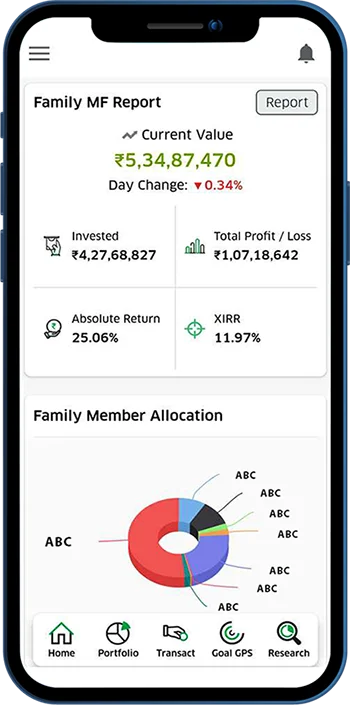



You can download the complete portfolio report including mutual funds & other assets. Get the historical performance of your portfolio easily & track the portfolio at your fingertips.
We offer a 100% paperless process of investment. It takes a few seconds to register a SIP or Purchase an ELSS.
Give purpose to your investments, you can map all your investments with the goal like child education, marriage or retirement.
Invest in well researched cherry-picked perfectly balanced portfolio.

























Working with FinstreetIndia has been a significant eye-opener for me regarding our financial management. CA Ravi provided a clear and honest assessment of our current financial position and outlined actionable steps to secure both our immediate and future financial stability. He has been exceptionally approachable and friendly, offering insightful recommendations and addressing all my queries with patience and clarity. His guidance has been invaluable in helping me navigate my financial decisions.

FinstreetIndia helped me to set financial goals, assess risk and choose suitable investment instruments. Vandana Ravi have been very approachable and friendly. Along with good investment advice, one of the best things about working with them is that they are always available and ready to patiently answer my queries. They have command on the Finance and Investments.
I would recommend others to invest with FinstreetIndia too.

FinStreetIndia is a one stop shop for all my financial needs. They have advised me on a suitable diversified portfolio, relevant products which cater to my needs as well as risk appetite and are managing my portfolio pretty well with proactive market monitoring and subsequent actions. In addition, they also cater to the taxation aspect of my finances. They truly live their motto of client centricity and are highly flexible to extend their financial service offerings as per the needs of the customer, thereby truly exhibiting the Customer First mindset. Appreciate it!
Would highly recommend FinStreetIndia (Ravi and Vandana) for their expertise and passion!

In our first meet, Vandana Ravi from FinstreetIndia fathomed my financial dreams and risk appetite very well. Initial consultations gave me conviction in their approach towards financial planning. The expertise that they possess on mutual funds is truly commendable. Most importantly FinstreetIndia is the institution who you can rely on.
It's been almost 3 years with FinstreetIndia. Periodic review and detailed analysis of my existing portfolio gives me a privilege.
I highly recommend FinstreetIndia to anyone who is looking forward for financial management.




Very professional and trustworthy investment service. They guide you based on your goals and risk level. Highly satisfied and definitely recommended!